Make your Shopify store easier to buy from
Customers need to understand the product, choose the right option and move through the store without unnecessary friction. A useful improvement starts with identifying where that experience is unclear—not copying a list of supposed conversion tricks.
I implement focused Shopify UX and storefront changes, especially around product pages, mobile interactions and the cart. We agree priorities, acceptance checks and a measurement approach appropriate to the store.
 Sarib Khan · Freelance Shopify Developer
Based in Lahore, Pakistan · Working remotely
Start with the shopping problem
Share the page or interaction causing difficulty and any relevant feedback or analytics. Product information, media, variant selection, quantity controls, navigation, delivery information or cart behavior may need review.
We distinguish evidence from assumptions. A usability issue can justify a fix, but it does not support an invented revenue forecast.
Turn a recommendation into working functionality
The work can include product-page layout, mobile selection states, clearer controls, reusable content sections and appropriate cart interactions. We check the design and required apps before defining implementation.
Performance matters where it affects usability, but speed work and conversion measurement are not the same service. An improvement must preserve the purchase path and meet the agreed functional requirements.
Use the right measurement for the store
Formal A/B testing needs suitable traffic, valid instrumentation, a testing tool and a defined hypothesis. It is not automatically included in development work or appropriate for every low-traffic store.
For a focused implementation, acceptance may centre on correct behavior and a documented UX recommendation, with later business metrics reviewed separately. If a formal experiment is required, its design and responsibilities are agreed before promising results.
Checkout changes depend on the available features
Product and cart work is different from changing Shopify's hosted checkout. Checkout requirements are reviewed against the plan and supported extension points; Plus-specific work belongs in the related service scope.
Relevant contribution examples
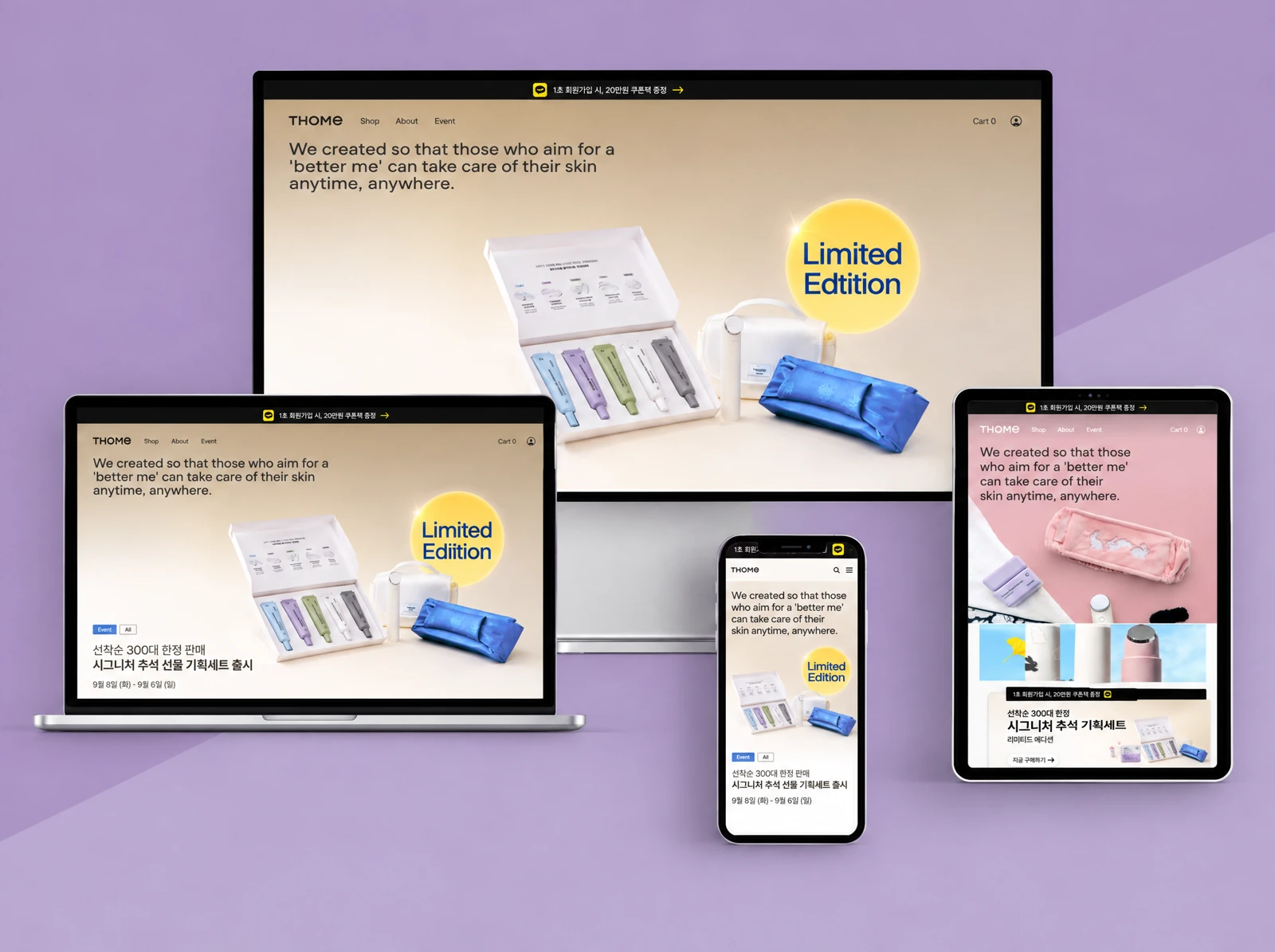
Daily Belts includes a quantity-selection requirement and THOME includes design implementation within a CRO-related brief. Their case studies explain contribution boundaries. Neither is presented as a measured conversion uplift.
Questions before improving a page
Do I need a full redesign? Not necessarily. A focused change may address the identified problem.
Can you guarantee more sales? No. I can define and implement the change; business outcomes need their own evidence.
Can testing be included? Functional QA is scoped to the work. Statistical testing is separately assessed for traffic, tooling and measurement validity.
See the work behind the portfolio
These examples describe storefront implementation. They do not imply app, Plus, Hydrogen or B2B delivery, or a measured conversion uplift.

Describe the friction
Send the page, the behavior that needs changing, required features and any useful data. We can decide whether a focused implementation, wider redesign or further investigation is appropriate.
For US projects, include your team’s time zone if it matters for reviews or meetings.
Related development services
Custom Shopify Theme Development
Build or improve your Shopify theme with responsive templates, useful editing controls and tested product and cart interactions.
Explore the scope 03 / ServiceShopify Speed Optimization Services
Find Shopify performance bottlenecks, prioritize theme and app fixes, and compare results under consistent conditions.
Explore the scope