
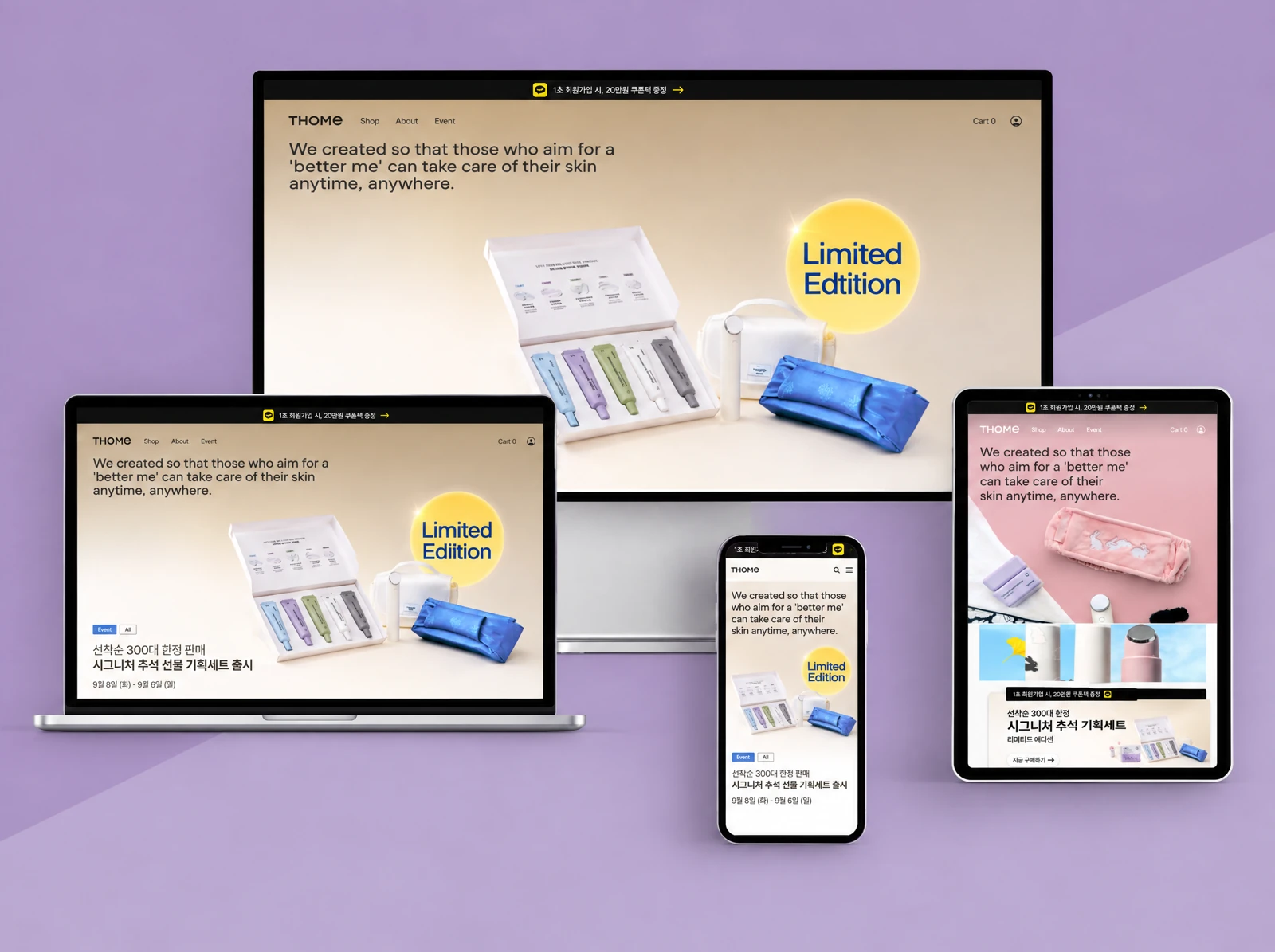
01 / THOME
The brief: carry the design into a working storefront
THOME’s engagement combined Figma to Shopify work with a focus on conversion rate optimization. My main work was on the design and the quality of the code behind it. The project therefore called for attention to both the visible storefront and the implementation that would support it.
A design handoff is a starting point for development. Turning it into a store introduces practical questions about content, responsive layouts, interaction states, and the way shoppers move between information and purchase actions. The work becomes valuable when those decisions retain the design’s character while making the storefront useful in everyday browsing.
02 / THOME
My contribution: design and code quality together
My principal contribution to THOME focused on design and code quality during the Figma to Shopify implementation. I treat these as related concerns: design decisions need a dependable implementation, and the structure of that implementation affects how comfortably the storefront can evolve.
In my approach to this kind of work, code quality means keeping the implementation understandable and purposeful. A developer should be able to follow how a piece of the interface is built and assess a change without unnecessary complexity. It also means being deliberate about where custom behaviour is needed, rather than adding complexity simply because it is possible.
The design side calls for the same discipline. Typography, spacing, image proportions, and responsive behaviour should support a coherent experience. A successful handoff is not just a desktop page that resembles a design file; the intention needs to remain clear when the content and available screen space change.
03 / THOME
CRO gives the visual work a practical purpose
Conversion rate optimization was a focus of the THOME project alongside the implementation work. In this context, the objective is to make the storefront support a clear buying journey. Attractive presentation matters, but the customer also needs to find relevant information, understand the product, and recognise the next action.
When reviewing a comparable storefront, I consider the relationship between visual hierarchy and customer decisions. Is essential information easy to discover? Do supporting sections help answer a question? Are purchase actions clear without competing with every other element? These questions explain my approach to CRO; they do not imply that a particular A/B test or revenue improvement has been demonstrated for THOME.
04 / THOME
Continuing with speed optimization
Speed optimization is ongoing on THOME. It sits alongside the design and code-quality work because the experience depends on how the page behaves as well as how it appears. Performance improvements should preserve the storefront’s important content and purchase functionality.
My approach is to use measurements to guide that work, then check the effect of changes on representative pages and interactions. This helps separate a promising idea from an improvement that can actually be demonstrated. There are no published performance scores, conversion percentages, or revenue figures attached to this case study.
What this work illustrates
THOME shows the kind of engagement where design sensitivity and development discipline need to work together. My confirmed contribution centres on Figma to Shopify, design and code quality, with a CRO focus and ongoing speed optimization. For a team with an established design direction, that combination helps define the development conversation beyond visual appearance alone.
This account describes my contribution and development approach. Quantified results are not published; speed optimization remains ongoing.